








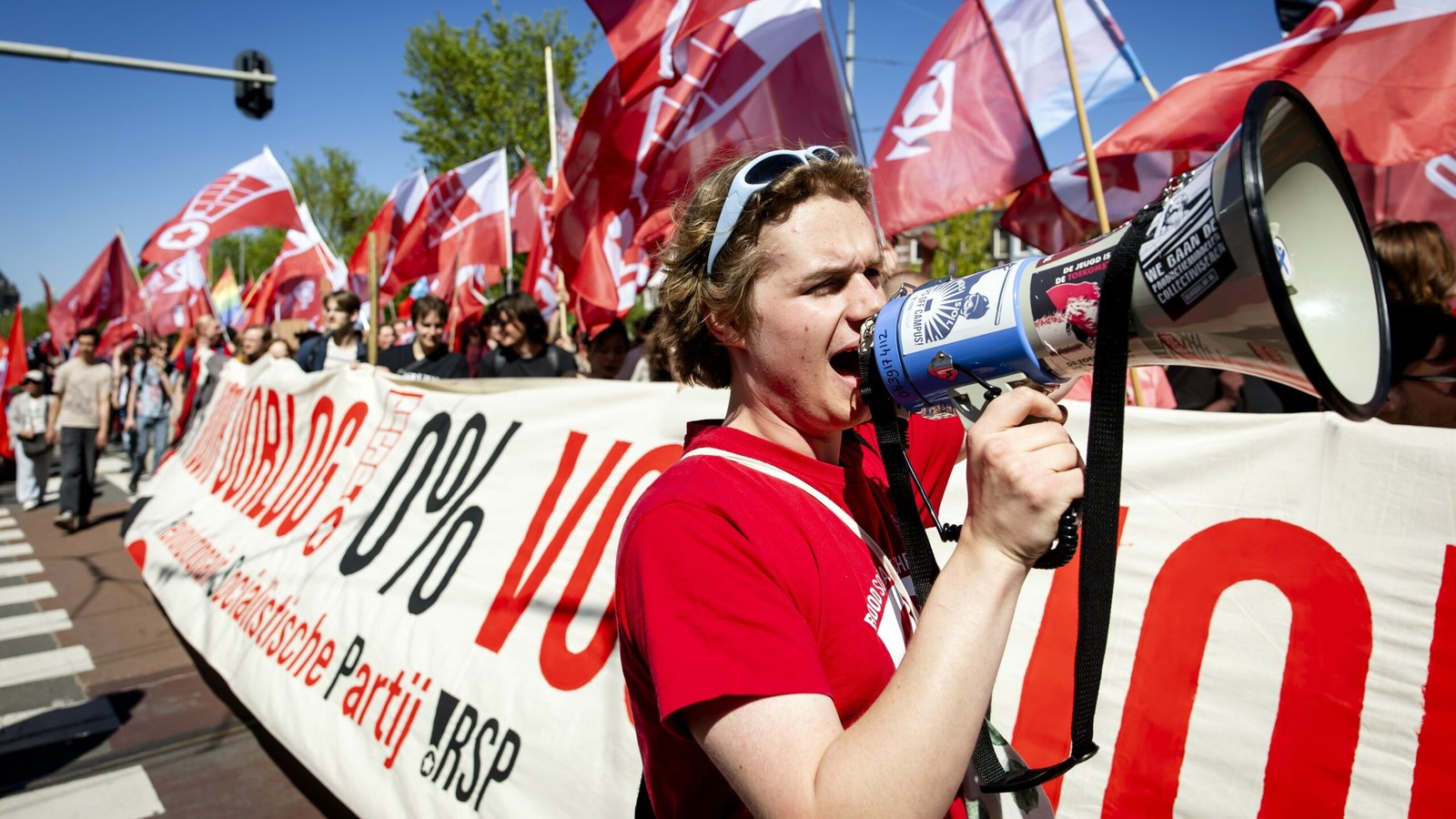

The Dutch trade union FNV has staged a protest march in Amsterdam to mark Labour Day. Roughly 18,000 people took to the streets to campaign for, among other things, a full closure of the gender pay gap.
As of 2024, the gap stands at 10.5%, according to statistics agency the CBS.
Men earned an average of €30.32 an hour and women €27.15. The pay gap is highest in the financial services sector and smallest in public administration and education. In 2010, the pay gap was 19%, the CBS said.
One protester told DutchNews at the march “it is ridiculous that we still have to fight for this today, but we will not stop”. Another said “we want equal pay – with no exceptions”.
The marchers also opposed cuts to disability and unemployment benefits that are planned by the Jetten coalition. The Netherlands is one of the only countries in Europe where Labour Day is not an official holiday.
Wage transparency
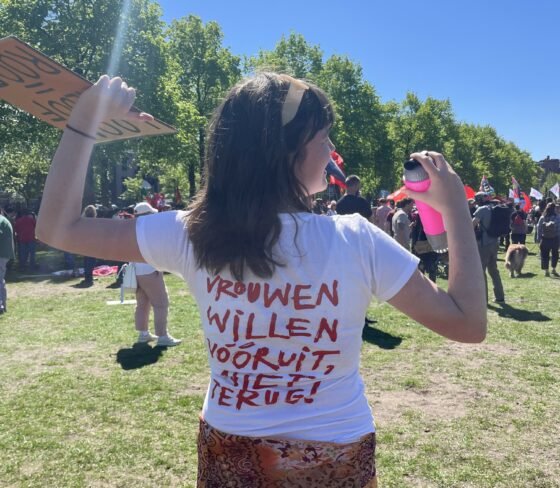
The Dolle Minas, a women’s rights campaign group, joined the FNV at the protest to demand three main changes regarding the gender pay gap: pay transparency, equal pay for equal work, and the swift implementation of the Wage Transparency Act.
This act will set a legal obligation on all companies to report annually on pay differences between men and women in their workforces.
It was originally set for implementation in June 2026 but was postponed until January 2027 to give companies more time to prepare. If this delay continues, it could cost women in the Netherlands between €1.9 and €3.8 billion in annual wages, according to the FNV.
FNV for Women project manager Ilze Smit told DutchNews at the march that she fears the delays could indeed go beyond the extended deadline and that the legislation could be watered down. “Corporations are trying to break down the law to reduce the reporting criteria, and so we are standing up alongside Dolle Minas today to fight that”.
Legal delays
The Dutch Wage Transparency Act stems from an EU-wide directive on gender pay, which requires all employers to openly report pay practices, bans salary secrecy, and strengthens enforcement to ensure equal pay for equal work.
The government’s decision to postpone the act goes against the European Commission. Industry bodies say the reporting requirements are extremely complex and require more preparation before they can be implemented properly.
“We didn’t fight [the 2027 deadline] in particular – for us, the most important thing is that after 50 years of legislation that allows unequal pay, we finally get good legislation. The six months extra doesn’t matter, as long as we get that good law”, said Smit.
“However, employers are pushing it even further than six months, but the first of January 2027 is really the latest we will accept”.
Curious as to how much of your salary you (or the women you know) are missing out on? The FNV has an online calculator tool that reveals how much you might be losing.