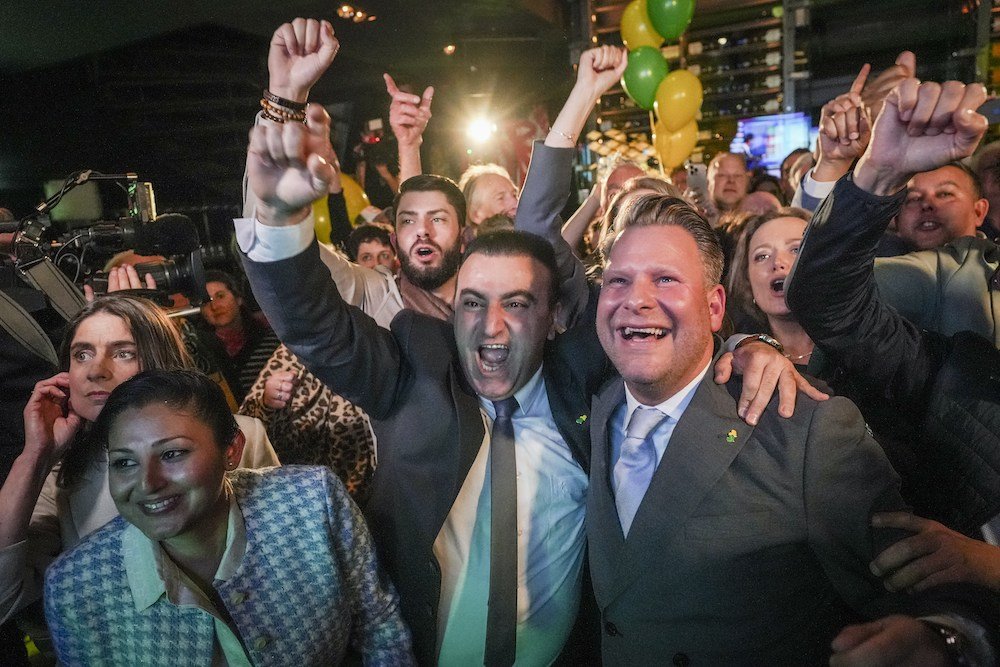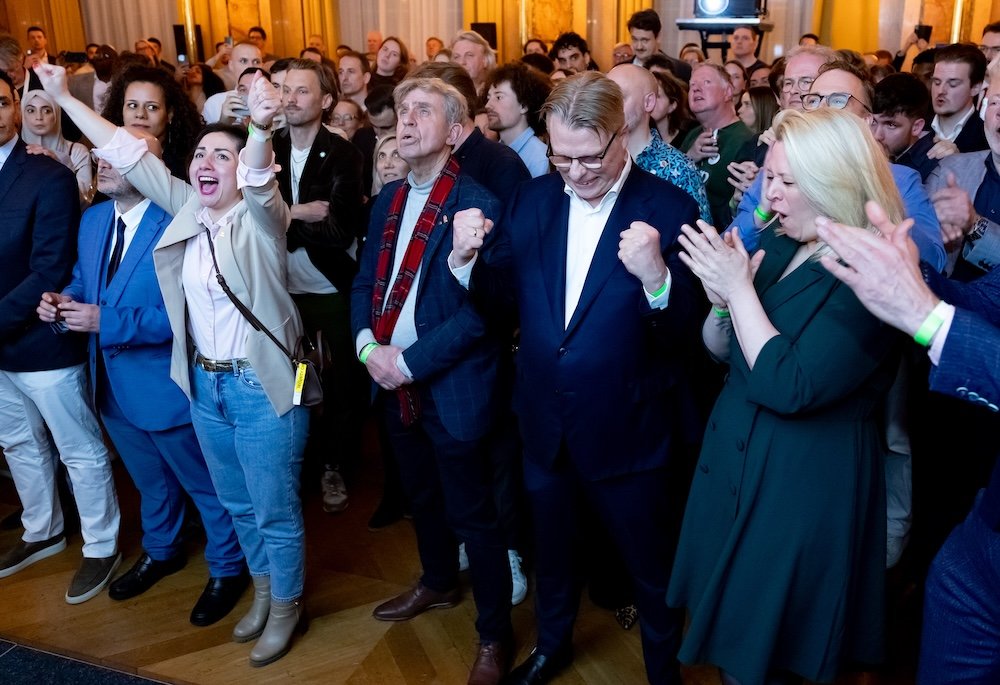









Local parties were the clear winners in Wednesday’s local elections, taking more than a third of the vote nationwide.
With most results counted by early Thursday morning, turnout stood at just over 54%, slightly higher than at the previous local elections four years ago. Counting is still under way in Amsterdam and Hoorn.
Local lists together received about 35.5% of the vote, up from 32.8% last time, meaning around 2.6 million voters backed a local party. In many councils, including The Hague, local parties are now the largest or second-largest group, making it difficult to identify national party trends.
Local parties performed particularly well in areas where the location of new refugee centres was an issue. “Anti-refugee feeling gets a face,” said the Volkskrant in its analysis.
The far right PVV became the biggest party in Pekela in Groningen, and in Terneuzen where a refugee centre was the biggest campaign talking point.
One of the local party biggest victories was in The Hague, where Richard de Mos’s Hart voor Den Haag increased its share of the vote from nine to 16 seats on the 45-seat council. The result makes it likely the party will take part in the next coalition after being excluded last time.
Far right party Forum voor Democratie also made gains, winning seats in most of the 104 councils where it had candidates.
Among national parties, the coalition performed broadly in line with the previous election. D66 won about 9% of the vote and gained seats overall, while the VVD and CDA recorded relatively stable results.
The GroenLinks-PvdA combination lost votes nationwide but remained the largest party in most of the biggest cities, including Rotterdam, where it finished just ahead of populist local party Leefbaar Rotterdam.
Party leader Jesse Klaver said he was “very proud” that the party had held its ground in urban areas after a disappointing general election.