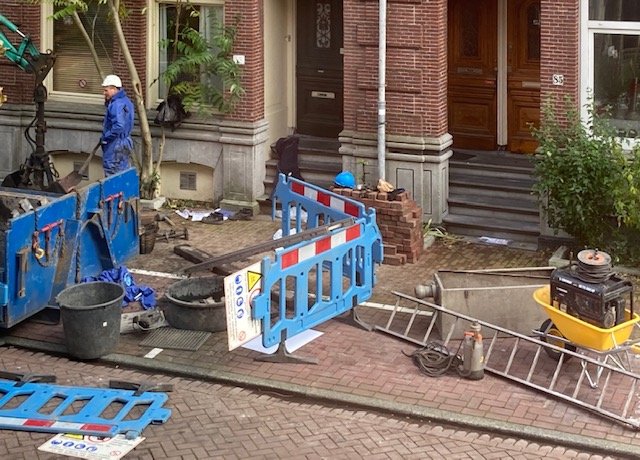











Energy company NAM will begin repair work this week on production wells at Warffum, in northern Groningen so it can restart onshore gas extraction at the site, according to RTV Noord.
The wells, which have been idle for some time, have filled with water – a common problem at dormant gas sites. NAM, which is jointly owned by Shell and ExxonMobil, says the installations need to be brought back into working order before production can restart.
The move comes as low European gas reserves and renewed instability in the Middle East have increased political pressure on the cabinet to extract as much as possible from the dozens of small onshore and offshore fields still in operation. The main Groningen gas field, once Europe’s largest, was closed in April 2024 after decades of earthquakes damaged tens of thousands of homes.
A contested permit
Warffum is one of the so-called “small fields” left out of the Groningen closure decree. In December 2024, the cabinet gave NAM the green light to keep producing at the site, and the company has applied to extend its licence until 2032.
Climate minister Sophie Hermans said at the time the gas was needed to heat homes, keep industry running and reduce dependence on foreign supplies.
The field is estimated to hold around one billion cubic metres of natural gas, or roughly 2% of current Dutch daily output.
The decision has been fiercely opposed locally. The provincial council of Groningen and campaign group Groninger Bodem Beweging challenged the permit at the Council of State after an earthquake hit the area in early 2025 and a second, 2.1-magnitude tremor followed in May.
In June, the court’s emergency judge ruled that the interests of NAM and the minister outweighed those of nearby residents, allowing extraction to continue.
Han Hefting, an executive at the local authority of Het Hogeland, which includes Warffum, said at the time that residents had been “suffering misery from earthquakes for years” and that local arguments had been ignored.
Pressure to drill more
The Warffum restart is part of a wider government push to slow the decline in domestic gas production. Last year, ministers signed a deal with the oil and gas industry to ramp up North Sea drilling, and energy firm One-Dyas recently doubled output at its platform north of Schiermonnikoog.
Around 90% of Dutch households still rely on natural gas for heating, and the government has said supplies will be needed until at least 2045.