










Amsterdam drivers still speed on 30 km/h roads as street design lags behind policy
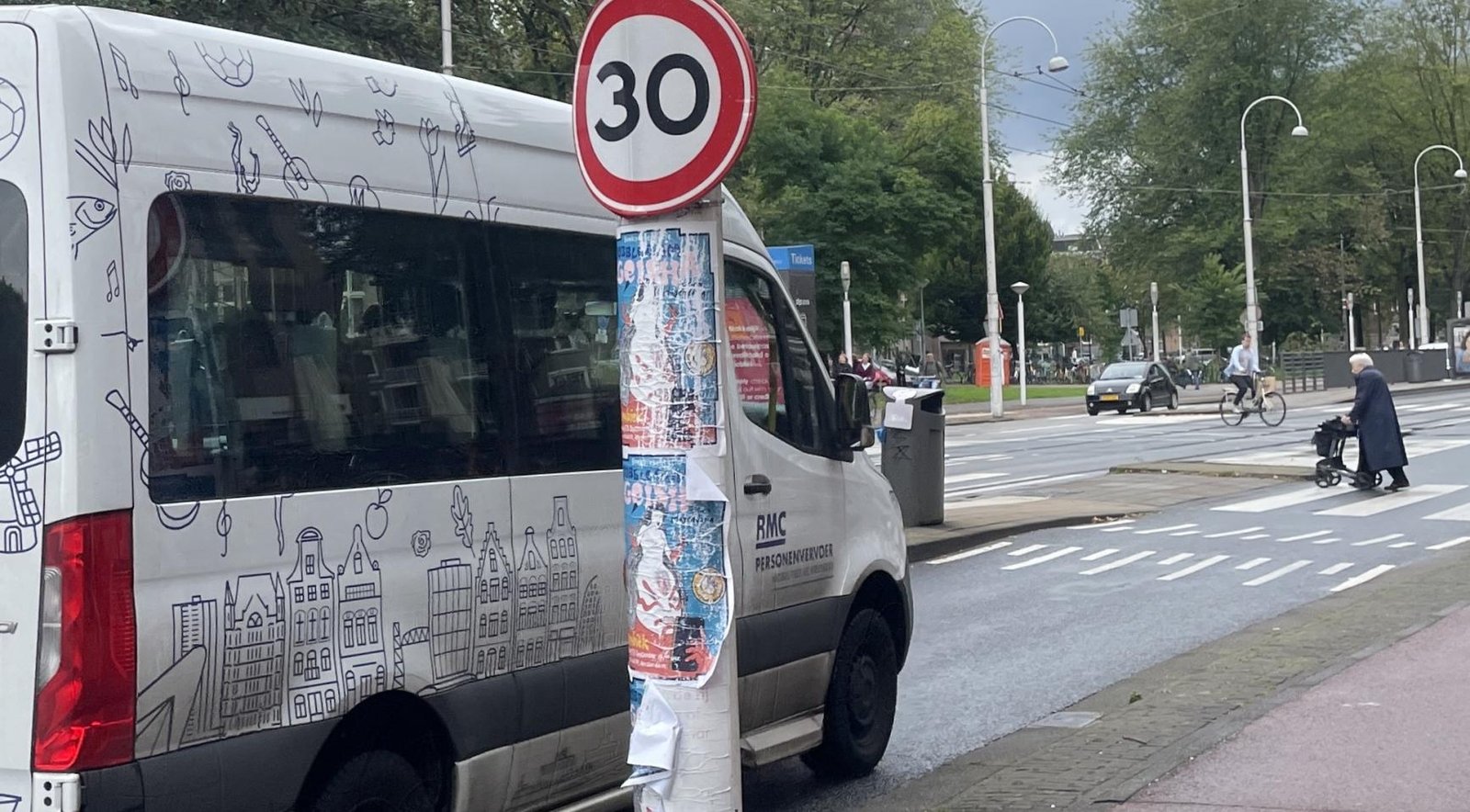
Drivers in Amsterdam continue to exceed speed limits on roads converted to 30 km/h, and national research suggests this is not a local anomaly but a structural issue seen across Dutch municipalities where street design has often not been adjusted to match the lower limit. On many roads, the physical layout still signals a 50 km/h environment.
A nationwide study by the Road Safety Research Institute SWOV helps explain this pattern. Across a sample of 54 roads, where the limit was reduced from 50 to 30 km/h, average speeds remain above 35 km/h, and around 15 percent of drivers still travel at 44 km/h or higher. The findings indicate that simply lowering the speed limit does not reliably produce full compliance when road design remains unchanged.
This national context is reflected in Amsterdam’s own experience. In the city, average speeds on 30 km/h roads fell by 5 percent in the first year after the policy was introduced in December 2023, followed by a further 2 percent decline over the past year. That suggests continued but slowing behavioral adaptation, consistent with SWOV’s finding that signage-driven reductions tend to be modest without physical redesign.
SWOV’s research also shows a clear design effect that helps frame Amsterdam’s outcomes. Where municipalities only installed 30 km/h signs without altering street layouts, speeds dropped by roughly 2 km/h on average. Where streets were physically redesigned—through measures such as narrower lanes, raised intersections, or different surface materials—the reduction increased to about 5.5 km/h. The strongest effects were observed when multiple design interventions were combined.
Amsterdam has largely followed a phased approach. Rather than fully rebuilding streets before implementation, the city lowered speeds on most roads at the end of 2023 and plans to gradually align infrastructure during scheduled maintenance cycles. That sequencing helps explain why compliance is improving but not yet structurally anchored.
The gap between policy and street design also affects enforcement. Amsterdam traffic alderman Melanie van der Horst has noted that many roads are not yet considered fully compliant 30 km/h zones under Public Prosecution Service criteria, limiting where enforcement can be applied. Vincent Karremans is among the officials involved in discussions with the city and prosecutors on how to resolve this mismatch between legal enforcement frameworks and on-the-ground conditions.
Van der Horst has said enforcement will likely remain concentrated on a small number of high-risk locations where speeding and serious crashes are most frequent, rather than being broadly applied across the network. She has also emphasized that while a full redesign across the city would take decades and significant funding, delaying improvements is not a viable option given safety objectives.
Safety data underline the rationale for the shift. At 50 km/h, the risk of fatal crashes is more than twice as high as at 40 km/h and more than five times higher than at 30 km/h.
Despite ongoing speeding, broader trends in Amsterdam still point downward. More than 40 percent of drivers now travel at or below 30 km/h on roads where higher speeds remain possible, up from 2024. Meanwhile, moderate speeding just above the limit has increased slightly, suggesting clustering around the threshold, while extreme speeding has declined sharply. “Real speeders,” defined as driving 55 km/h or more, fell from 1 percent in 2023 to 0.2 percent in 2024 and 2025.