









At least 18 Dutch people suffer retinal damage after watching solar eclipse
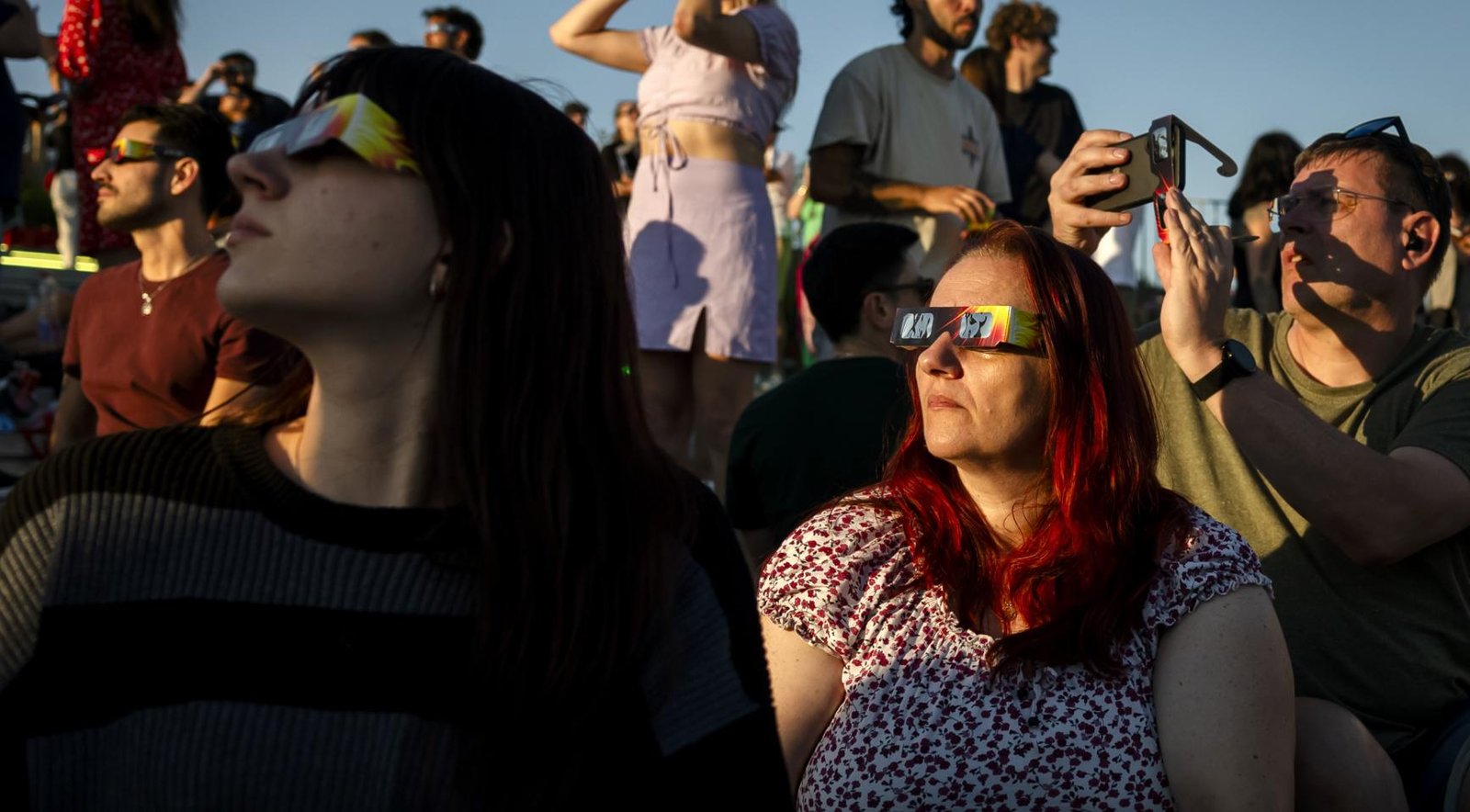
At least 18 people have been diagnosed with retinal damage after looking at the sun during the partial solar eclipse on August 12. The Dutch Ophthalmological Society (NOG) said the affected patients include five children and 13 adults.
The NOG did not carry out a formal study. Instead, ophthalmologists throughout the Netherlands were asked to keep track of patients who reported eye problems related to the solar eclipse during the week of August 12.
Most patients have reported seeing spots, which the NOG considers a mild form of retinal damage. “A few ophthalmologists have reported more serious cases. It is not yet possible to determine whether those patients will fully recover,” the organization said. The NOG expects to know more about the long-term outcomes in around a year.
The NOG said the widespread media attention surrounding safe ways to watch the solar eclipse may have increased public awareness.
The event on August 12 was the largest partial solar eclipse visible from the Netherlands since the memorable eclipse of August 11, 1999. At its absolute peak, which occurred around 8:11 P.M,, the moon covered approximately 88% to 90% of the sun’s surface over the country. This specific level of solar coverage will not happen again in the Netherlands until the year 2081.
Despite public warnings, a pre-eclipse survey revealed that nearly one in five Dutch citizens, around 19%, actively intended to watch the sun with no eye protection at all.
The clinical condition caused by looking directly at the sun is known as solar retinopathy. Eye specialists from Amsterdam UMC explained to RTL that the eye’s cornea and lens act like a magnifying glass, focusing concentrated ultraviolet and infrared radiation directly onto the macula, the delicate, central part of the retina responsible for sharp vision, reading, and recognizing faces.
Reporting by ANP and NL Times