









Medieval churches in Groningen may be cracking because of drought as well as earthquakes, according to a study reported by broadcaster NOS.
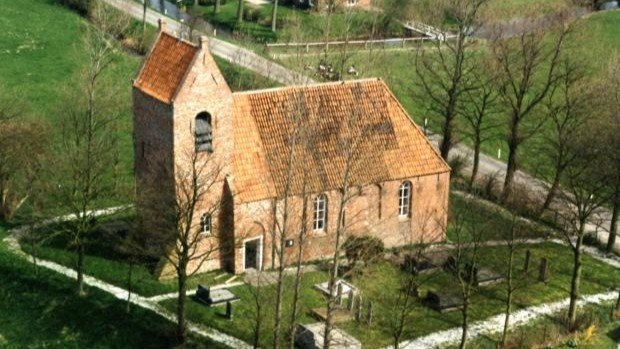
Researchers from water and soil research institute Deltares and the Hanze University of Applied Sciences looked at how drought affects the wierden, man-made dwelling mounds, under churches in Oostum and Den Ham, northwest of the city of Groningen.
The study was commissioned by the province and the Old Groningen Churches Foundation (Stichting Oude Groninger Kerken).
The research began after new damage appeared in the church at Oostum in 2018, two years after suspected earthquake damage there had been repaired. There have been no major quakes in the area since, but the damage appears to be getting worse.
The nave of the Oostum church has stood for 800 years. “It’s not a given that this church will still be here in another 800 years,” researcher Floris Boogaard told NOS, “because it is ageing very fast now.”
Boogaard said lab tests showed the church stands on clay that swells when wet and shrinks during drought, while peat in the ground oxidises and compacts as groundwater levels fall.
He said increased traffic, changes to the surroundings and earthquakes all contribute to cracking, but that drought is the only one of those factors to have changed significantly in recent years, while the cracks have become much worse.
“The climate is changing,” he said. “Dry periods are significantly longer: in 2018 it was dry for two months, and that really does have an effect.” This year also had exceptionally long dry spells and droughts.
The two-year study is still underway, and the researchers say longer-term research is needed before firm conclusions can be drawn. They warn that other historic buildings face the same problem.
Possible solutions are still being examined, but the researchers say the churches need stable water levels around them. At Oostum, pits could be dug around the church to collect rainwater, which would then slowly seep into the ground.