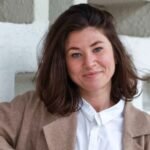






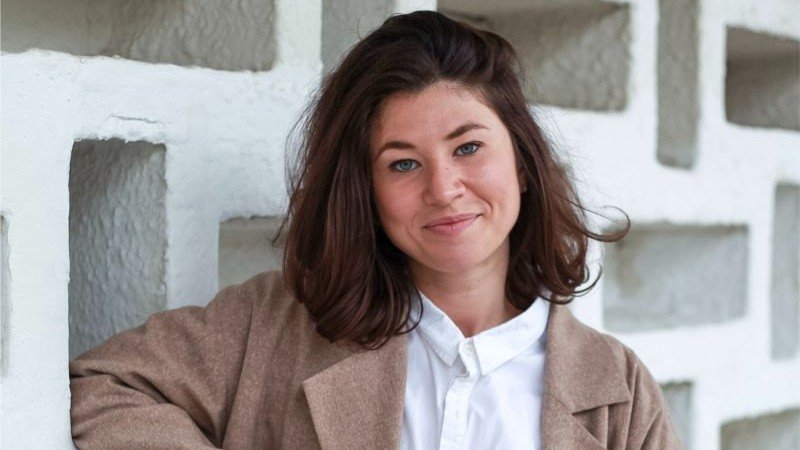

Elena Melkumova was head of education at a contemporary art museum in Moscow when a 2016 conference trip persuaded her to study museology in Amsterdam. She came back in 2022 and, after three years in the lighting industry, now creates educational programmes for lighting designers while working as an independent curator. She finds Dutch directness a relief and recommends a 12km walk through the dunes to the sea.
How did you end up in the Netherlands?
In 2016 I was head of education at Garage Museum of Contemporary Art in Moscow, and I was invited to an International Council of Museums conference on exchange between Dutch and Russian museum professionals. I fell for the country almost immediately: the professional community, the way people talked about culture, the networking. After the first day of the conference I called my mother and told her I wanted to study here.
So I ended up doing my master’s degree in museology at the Reinwardt Academie of the AHK. It was quite a spontaneous move. In 2022 I came back to Amsterdam, without any proper plan, because of the geopolitical situation. Since then my path has taken an unexpected turn. For three years I left museums for the lighting industry, but now I am slowly but surely coming back to the cultural field.
Today I combine the two worlds: I create educational programmes for lighting designers, and as an independent curator I still make exhibitions, most recently at the National Gallery of Armenia, with a Dutch artist among the participants. I hope to bring this exhibition to the Netherlands soon as well.
How do you describe yourself: expat, lovepat, immigrant, international?
In 2016 I felt 100% international, as I came because I had fallen in love with a professional culture. When I moved in 2022, I felt more like an immigrant at first, as I was genuinely puzzled about what to do and how to define myself. Now I feel international again. My work has always moved between countries, and that in-between position is where I am most at home.
How long do you plan to stay?
Each winter I have a different answer to that. Maybe I need to plan more of my holidays for the winter, and that will change. Last year I spent the winter in Portugal, and it was amazing. But coming back to the question: if I am honest, I have stopped answering that with a number. The Netherlands has shaped how I work and who I am now, and that stays with me wherever I am.
Do you speak Dutch and how did you learn?
By now my Dutch is good enough to follow work meetings, but not good enough to stop everyone at the bakery from switching to English. Strangely, the more I understand, the higher the barrier to speaking seems to get. I just need to push through it. Combining serious study with a full-time job and freelance work has been a challenge, but I have promised myself that next year I will get serious about learning and practising.
What’s your favourite Dutch thing?
Directness. I come from a culture where reading between the lines is perhaps too common a skill. In a Dutch workplace, when your manager says something, that is what they mean, and you do not have to spend the evening decoding it. For me that was a relief, and honestly a kind of healing.
How Dutch have you become?
I think I have become more direct and much more functional. I now judge things, from a bicycle to an exhibition layout, first by whether they work.
Which three Dutch people (dead or alive) would you most like to meet?
Bas Jan Ader, the conceptual artist who vanished at sea in 1975 while attempting to cross the Atlantic in a tiny boat, as part of his work In Search of the Miraculous. I would like to ask him what he was looking for.
Karel Martens, who makes his prints with found objects on an old letterpress. I would like to know how he has kept playing for sixty years.
And Robby Müller, the cinematographer who often worked only with natural or found light. I would like to ask him what he looked for first when he walked into a room.
What’s your top tourist tip?
Take a train, leave the city and get lost in the dunes somewhere by the sea. My favourite long walk: take the train to Overveen and cross the dunes to the Parnassia aan Zee beach pavillion, looking out for all the animals on the way. Stop there for a soda or an ice cream and maybe a dip in the sea, then walk on to Bloemendaal aan Zee and have mussels for lunch at one of the lovely beach bars with a view.
Then slowly but surely carry on to Zandvoort aan Zee and take the train back to the city. It is an easy 12 km walk. But if the weather is not great (so, half of the year, haha), I would recommend spending half a day at the Eye Filmmuseum: first see the current temporary exhibition, then have a quick lunch at the café overlooking the IJ, and finally watch one of the classics on 35mm.
Tell us something surprising you’ve found out about the Netherlands.
I was stunned at the beginning, and I am still amazed by how physically active people are here. People in this country spend so much time outside cycling, walking, exercising and even swimming, and I have adopted that 100%.
If you had just 24 hours left in the Netherlands, what would you do?
I would take my dog for a long early-morning walk in the Amsterdamse Bos. Then I would pay a short visit to the Stedelijk or the Rijksmuseum to see a few of my favourite pieces. After that I would have lunch with friends somewhere on a terrace.
Then I would take a train to the sea for a relaxed walk in the dunes and eat some oysters on the beach. Back in the city, I would use my Cineville card in the evening to see a great film at a cosy neighbourhood cinema, preferably LAB111 in Amsterdam, my all-time favourite.
Elena was talking with Louis Gore-Langton