









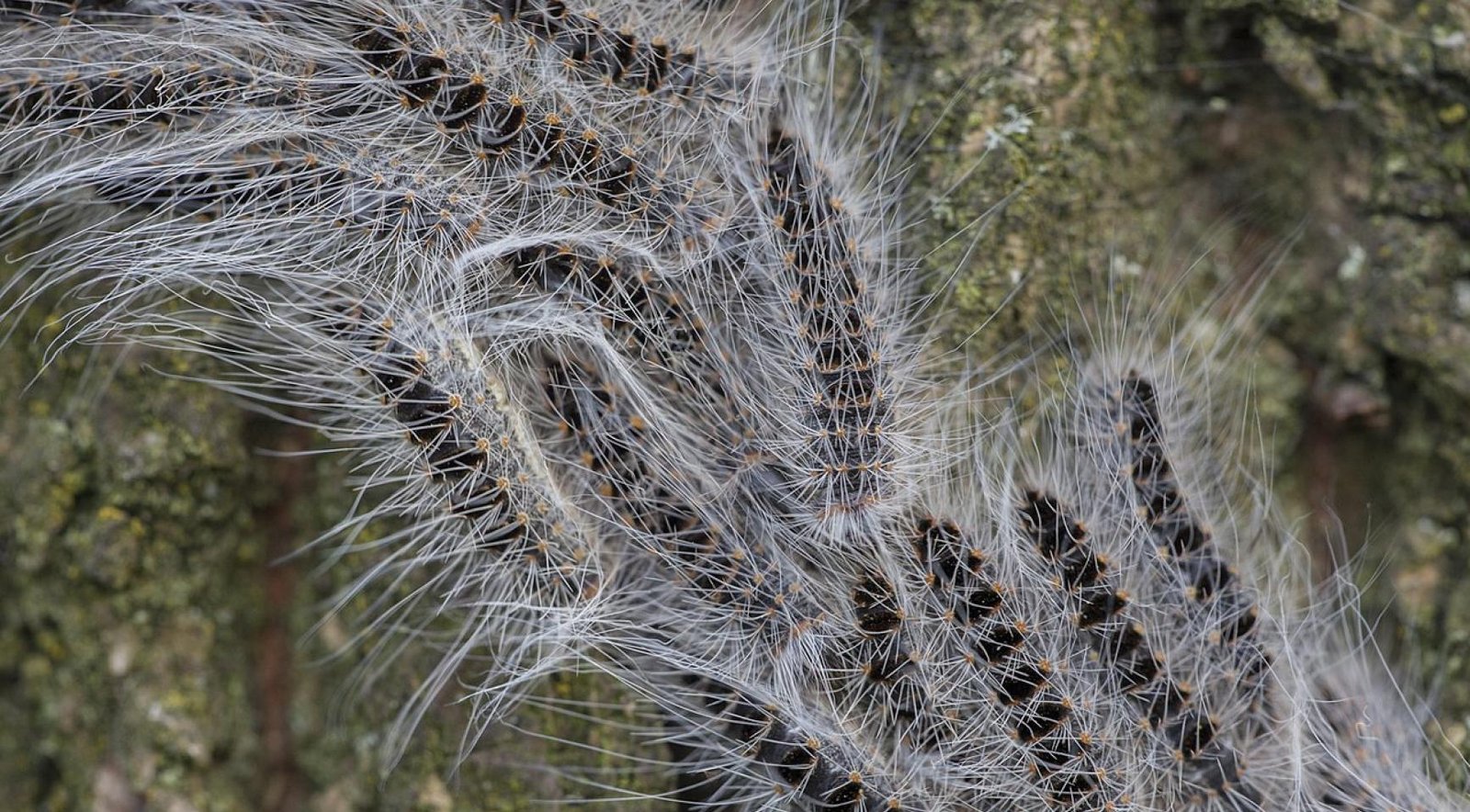


Itchy, sneezy summer? Oak processionary caterpillars make early Dutch arrival
Oak processionary caterpillars have been seen earlier than ever this spring in the Netherlands. According to the Oak Processionary Caterpillar Knowledge Centre, the insects, known to cause problems later in the season, were spotted at the start of the week in Hengelo, in the province of Overijssel.
“Around mid-May, we can expect the first urticating hairs,” the knowledge center said via nature platform Nature Today. In warm weather, this could happen earlier.
The earlier record dated back to March 30, 2014, but the caterpillars were now seen a week sooner, on March 23. Experts say the unusually warm and sunny conditions likely explain the record-breaking early sighting. The caterpillars were found in an oak tree in Hengelo and had only just emerged, meaning they were still in their earliest larval stage.
As they mature, the caterpillars produce hundreds of thousands of microscopic hairs, which they release when disturbed or under stress. These hairs can cause itching, rashes, and irritation to the eyes and respiratory system in humans.
The caterpillars emerged at roughly the same time as oak leaves began to unfold, a crucial synchronization that ensures access to fresh, nutrient-rich foliage needed for early development.
Due to the early emergence, municipalities are already preparing preventive control measures, such as biological agents, which must be applied while the caterpillars are still young and before they develop their urticating hairs.
Authorities encourage residents to support natural predators, for example, by installing nest boxes for birds such as tits and increasing biodiversity, as these species can help limit caterpillar populations.
Dog owners are being especially cautioned: dogs that sniff near the bases of oak trees with old caterpillar nests can develop serious irritation of the tongue and mucous membranes.
Reporting by ANP and NL Times