







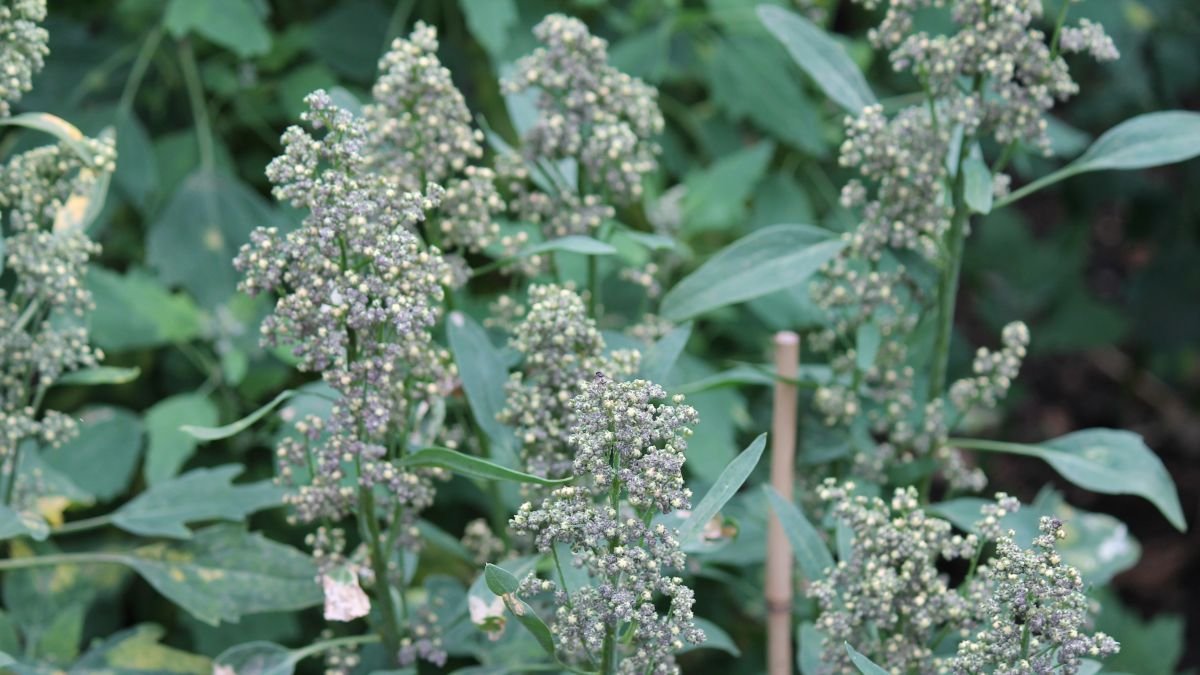

More than two dozen farmers in the Netherlands are growing quinoa, a South American seed that copes with salt far better than the crops usually planted on coastal land.
Salt is a worsening problem around the Dutch coast, with too little fresh water flowing to hold back the sea, and salt also seeps up from the ground in dry conditions.
This destroys potato and onion yields, but quinoa can survive much more easily, being able to withstand up to 12 grams of salt per litre of water. Potatoes begin to struggle at one gram.
Robert Van Loom, a researcher at Wageningen University, began breeding quinoa for Dutch conditions in the 1990s. He crossed an Ecuadorian variety, which could not handle the long Dutch summer days, with a Chilean one that was too bitter to sell. That cross became the basis for growing quinoa across Europe.
Renze Rispens, a farmer in Vierhuizen in Groningen, grows crops close to the sea dyke, on ground that has always carried a lot of salt. He read about quinoa in a trade magazine and planted it last year. Even in this summer’s drought, he said, the crop is standing well.
Most growers have contracts with GreenFood50, set up to sell Dutch-grown quinoa. Founder Marc Arts said its farmers now work about 200 hectares, producing 600 tonnes a year. A few others grow it independently.
Jumbo has switched its own-brand quinoa entirely to organic Dutch supply, under a three-year contract covering 12 farmers. Dutch quinoa costs more to buy in than imported, sustainability manager Marjolein Verkerk said, but she expects that to level out. The chain sells hundreds of thousands of packs a year.
Quinoa grew up around Lake Titicaca in the Andes, which was once a saltwater lake. That is where the salt tolerance comes from.