








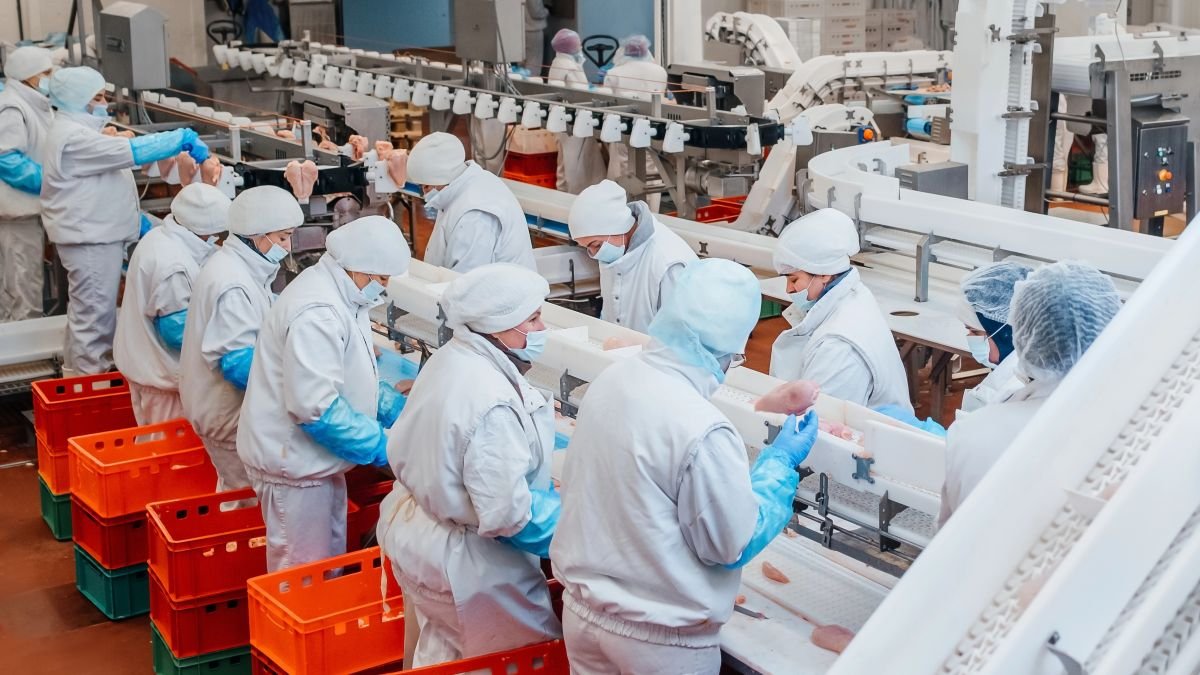

The Dutch meat-processing sector says it has begun improving the treatment of foreign workers in its abattoirs, in an attempt to stop the government from barring it from using foreign workers employed on temporary agency contracts. The FNV trade union has dismissed the plan as window-dressing.
Social affairs minister Hans Vijlbrief gave the industry until June 15 to show real improvement or face a ban on hiring agency workers, who make up much of the slaughterhouse workforce.
Industry body VleesNL met the deadline with an action plan that, the current affairs programme Nieuwsuur reported, claims “demonstrable steps on all fronts”, including working only with certified agencies, fewer instant dismissals and fewer workplace accidents.
Vijlbrief, who set the deadline during a parliamentary debate on labour migration, said there had been 29 rounds of talks with the sector since 2021 without the necessary progress. He is expected to decide in about two weeks, after the Dutch Labour Inspectorate publishes a new report on the industry.
“A paper reality”
The FNV is unconvinced. In interviews with Nieuwsuur, vice-chair Nine Kooiman called the plan “a paper reality” and “a case of the butcher checking his own meat”, and said foreign workers are still being exploited and intimidated.
The sector relies heavily on workers from central and eastern Europe, often housed and transported through the agencies that employ them. The labour inspectorate found in 2024 that at three of 13 meat-sector agencies it examined, between 40% and 80% of workers were dismissed on the spot, cutting their pay immediately.
A 2020 report by former Socialist party leader Emile Roemer found serious abuses going back years and recommended licensing agencies and ending the practice of tying workers’ housing to their jobs. VleesNL produced a first version of its action plan in 2024.
The German model
The FNV points to Germany, which banned subcontracting in its meat industry in January 2021 and agency work three months later, forcing companies to employ slaughterhouse staff directly.
Around 35,000 previously outsourced workers were taken onto company payrolls, and a recent study found workplace accidents fell sharply.
“In Germany people are in direct employment on a huge scale and they still eat bratwurst that is affordable,” Kooiman said, arguing Dutch firms should pay decent wages too.
The sector says a blanket ban would penalise well-run companies and push up prices.