










Rhine reaches lowest water level ever recorded at Dutch border
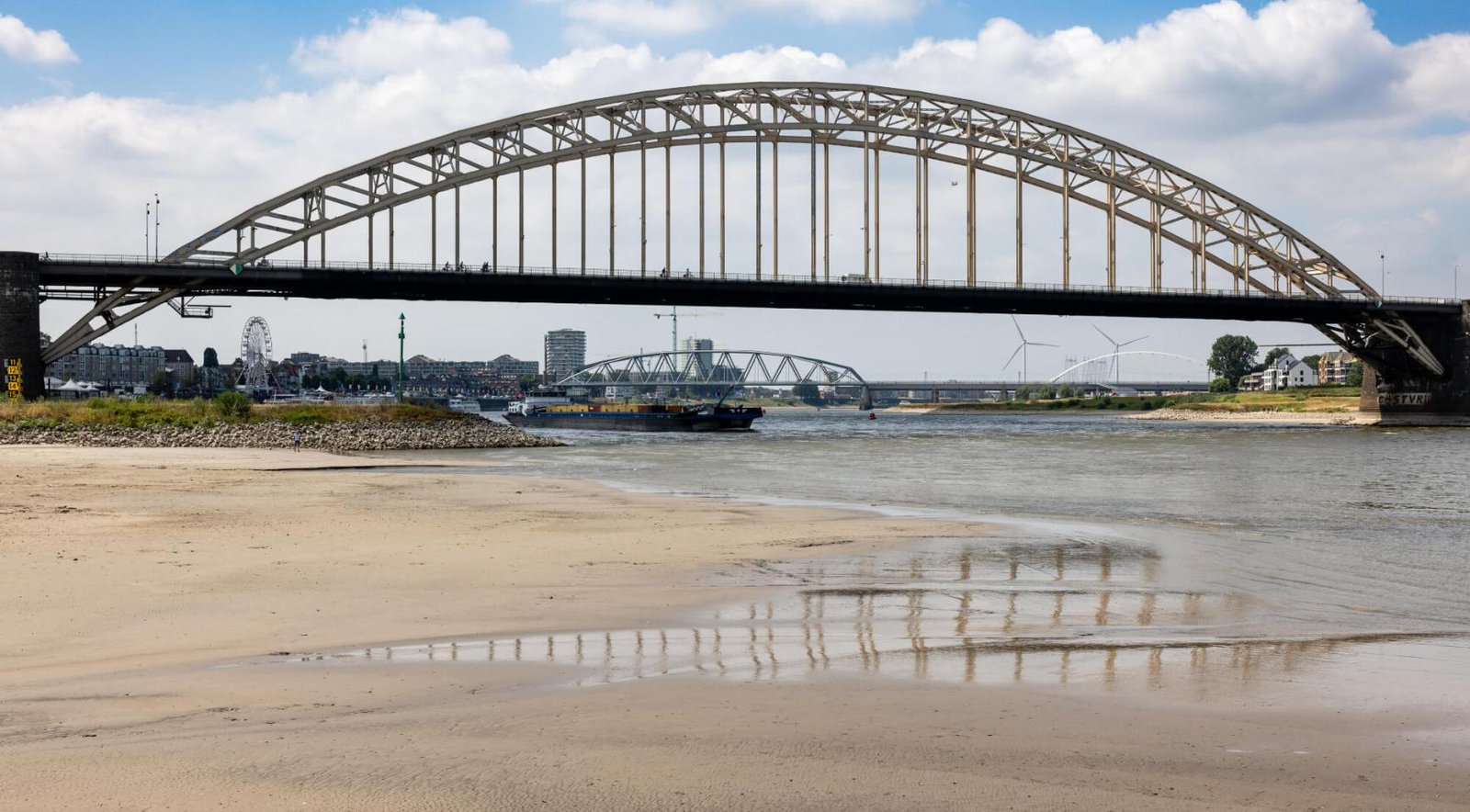
The Rhine River has officially dropped to its lowest water level ever recorded at the Dutch border entry point. The critical measuring point at Lobith, where the Rhine crosses from Germany into the Netherlands, reached an all-time low on Thursday, De Telegraaf reported.
The water level plummeted to 6.47 meters above NAP (Normal Amsterdams Peil). This officially broke the previous historic low of 6.48 meters above NAP, which was set during the severe drought of August 2022. Water experts from Rijkswaterstaat note that these severe depth issues normally do not emerge until September or October.
The amount of water physically entering the country has slowed to a crawl. The Rhine’s current discharge rate is down to 692 cubic meters per second. Normally, during this time of the summer, the river carries more than double that volume, averaging around 1,900 cubic meters per second.
According to hydrological experts reported by De Gelderlander, the river has essentially “hit the bottom of the barrel” due to two coinciding climate factors. The alpine snowpack and glaciers that feed the source of the Rhine dried up months ago. Persistent, widespread drought across the entire German and French river catchments means no rain is replenishing the basin, while scorching temperatures accelerate evaporation.
The Rhine is Europe’s most vital inland trade artery, connecting the Port of Rotterdam to Germany’s industrial heartlands. The shallow waters have heavily disrupted transit.
Further upstream in Germany, the critical chokepoint at the Kaub gauge has dropped to a critical 27 centimeters, with forecasts expecting it to hit a record-shattering 24 centimeters. Commercial barges are forced to run at less than 20% to 30% of their total carrying capacity to prevent their hulls from bottoming out.
Shipping companies have to distribute single loads across multiple partially filled vessels. This logistical nightmare has driven freight prices from Rotterdam up from €45 per metric ton in June to nearly €150 per metric ton.
The Kiel Institute for the World Economy warned that this transport bottleneck could shave 0.2% off Germany’s economic output, potentially freezing summer growth.
Holiday providers have begun abruptly cancelling or cutting short Rhine River cruises because passenger vessels can no longer safely navigate the shallow bends.
The crisis is triggering localized environmental emergencies. Ecologists report that the receding, warming water is proving disastrous for young fish populations, which are losing their shallow breeding grounds and suffocating due to falling oxygen levels.
According to water monitoring updates by Omroep Gelderland, the record is expected to drop even further over the weekend, with water levels projected to hit a depth of 6.45 meters above NAP by Friday. While Rijkswaterstaat has implemented regional water-saving measures, a national emergency mechanism has not yet been fully activated.