








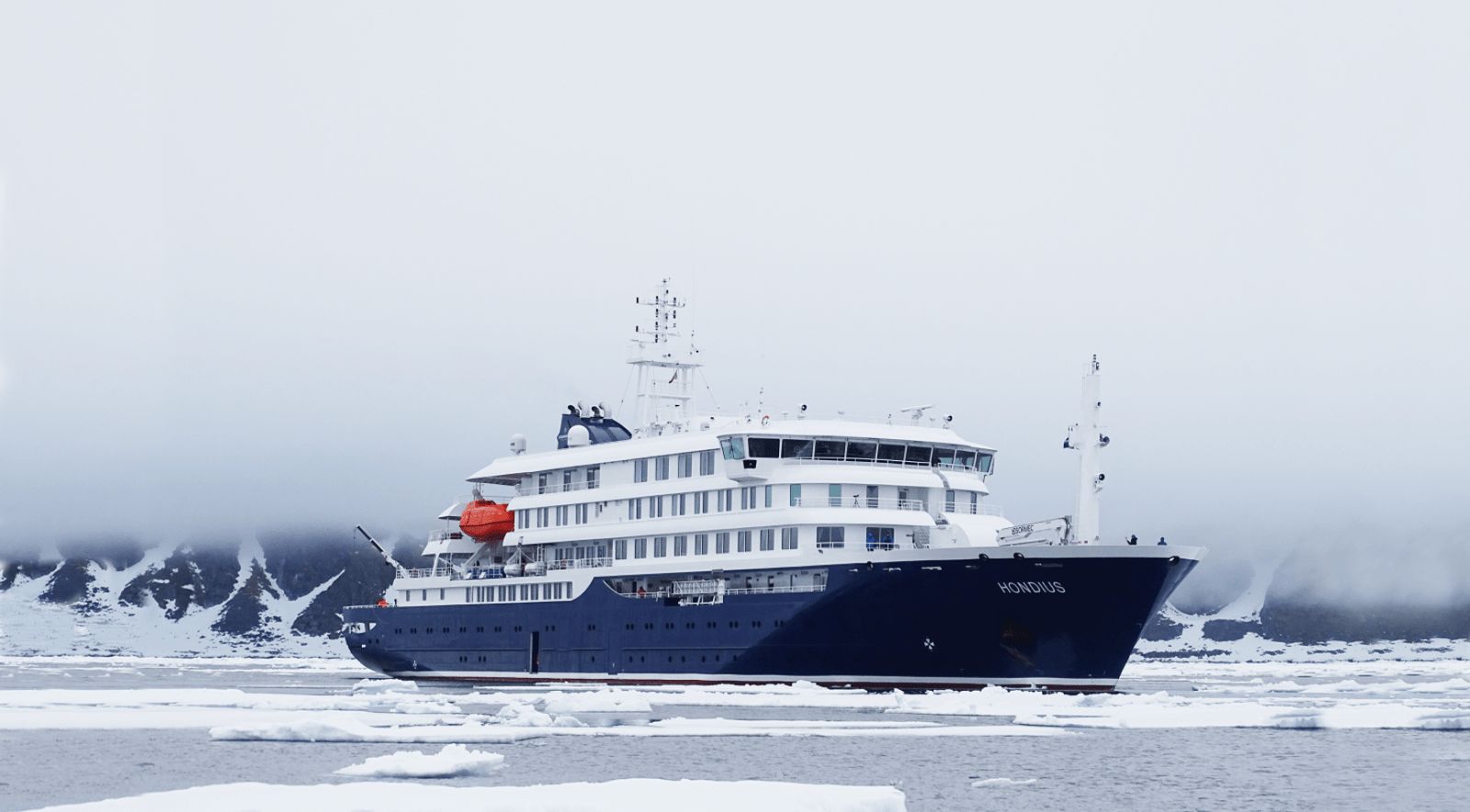


Video: Hondius passengers arrive at Eindhoven Airport; Dutch going into home-quarantine
The plane arranged by the Dutch government to evacuate passengers of the MV Hondius landed at Eindhoven Airport just before 8:30 p.m. on Sunday. There were 26 passengers on board, including eight Dutch. The Dutch nationals were taken home, where they must self-quarantine for six weeks to prevent the transmission of the hantavirus, NOS reports.
The Dutch ship Hondius was en route from Argentina to Cape Verde with approximately 150 people on board. Several people on board fell ill with what later turned out to be the hantavirus. Three died: a Dutch couple from Friesland and a German woman. Another Hondius passenger is in intensive care in a hospital in South Africa.
While in self-isolation, the Dutch cruise ship passengers must measure their temperature daily and keep the municipal health service GGD informed about their condition. They’re allowed to go outside occasionally for a short walk, but must wear a mask and keep a distance of 1.5 meters from others, including their housemates.
The self-isolation will happen on trust – the authorities will not enforce it, Public Health Minister Sophie Hermans told Nieuwsuur. “I expect that people getting off that ship will realize: I might have this, and I am not going to run the risk of infecting others,” she said, stressing how serious the virus can be. “Three people have died from it, and you can get very sick from it.”
In addition to the Dutch, there were 18 foreign nationals on board the evacuation flight: four from Germany, four from the Philippines, two from Belgium, two from India, one from Argentina, one from Greece, one from Guatemala, one from Montenegro, one from Portugal, and one from Ukraine. Most of them are being collected from Eindhoven by their governments and taken home.
Germany sent a group of firefighters to transport the four German nationals in a specially equipped infectious disease ambulance, WDR reported. Belgium sent a defense ambulance to pick up its nationals. They were taken to a hospital in Antwerp for an examination, after which they went into home quarantine, VRT Nieuws reported.
The Hondius arrived at the port of Granadilla de Abona, a southern municipality of Tenerife, early on Sunday morning. The Spanish health services tested all people on board for the hantavirus upon arrival, before transporting them in small groups to a nearby airport via boat and bus. All passengers wore masks and protective clothing.
From the airport, repatriation flights started. A plane carrying 14 Spaniards departed first, followed by a flight with five French passengers, and an aircraft with Canadians on board. The Dutch flight followed. On Monday, the Dutch government is sending another plane to Tenerife to pick up part of the cruise ship’s crew. Other crew members will continue on the ship to the Netherlands.
France has reported that one of its nationals was showing symptoms of the hantavirus. The United States reported that one of its nationals from the cruise ship had tested positive, but only had mild symptoms.
The Hondius passengers became infected with the Andes variant of the hantavirus, the most dangerous variant because it causes serious illness and can spread between people. However, the World Health Organization (WHO) and the RIVM have stressed that there is no reason to think the hantavirus outbreak on the cruise ship will lead to a pandemic. The chance of human-to-human transmission is very small.
Minister Hermans also acknowledged that the measures in place for Hondius passengers – social distancing, face masks, and self-isolation – harken back to the coronavirus pandemic. But she, too, stressed that this is not the same as Covid-19. “The coronavirus was new, but we already know this virus. In addition, the coronavirus was constantly changing: this is a fairly stable virus, and it spreads very differently.”
The GGD took blood samples from the Hondius passengers who arrived in the Netherlands on Sunday and will test them for the hantavirus. “We know that no one on board the plane had any symptoms, so that is very good. But we are dealing with a virus where you can develop symptoms over a longer period of time. That is why we are on top of this so tightly.”