









Heat: Schools implement special rosters, Amsterdam sets up cool-down spots
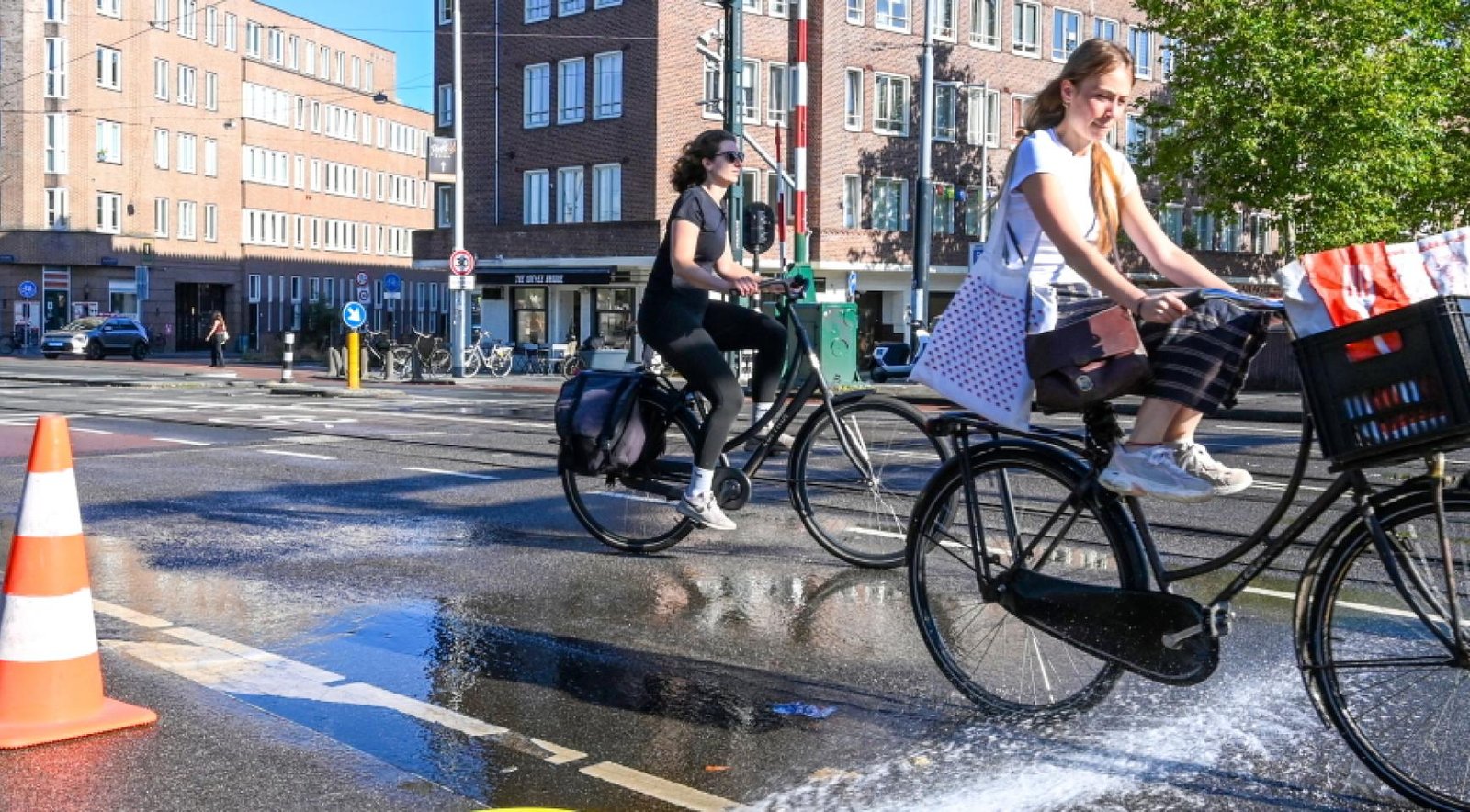
On Tuesday, Amsterdam will open 12 locations where people can go to cool down from the heat, the municipality and health service GGD announced. Due to the persistent heat, many schools are switching to tropical rosters in the coming days, with shorter school days or fewer lesson hours, more breaks, and extra ventilation.
The Amsterdam cool-down spots are located in libraries, city farms, theaters, churches, community centers, or supermarkets. They have seating, water, and toilets. Many allow pets.
During an initial pilot period, the cool-down spots will be primarily in the Nieuw-West district, which city calculations showed has the highest heat risks. The assessment looked at how much shade is available, how many vulnerable people, like small children or the elderly, live there, and whether homes heat up quickly. Spending a lot of time in a home where temperatures are 27 degrees Celsius or higher could be bad for health, GGD Amsterdam warned.
The locations are available as part of the Amsterdam Heat Plan, which is in effect along with the RIVM’s National Heat Plan. The spots were conceived because the number of tropical days with maximums above 30 degrees is increasing due to climate change.
“Staying cool should not depend on your income, your network, or the home you live in,” said Alderman Alexander Scholtes. “That is why we are making it concrete with these cooling spots: close by, free, and in places people know.” Locations that want to contribute to a cooler city can register. The spots can be seen on the GGD’s online “Cooling Map.”
During the National Heat Plan, everyone must take the heat into account and is asked to look out for vulnerable people, animals, and nature. From Wednesday through Friday, the KNMI will implement a code orange weather warning for extreme heat in the central and southern parts of the country. In Groningen, Friesland, and Drenthe, a code yellow warning applies.
Schools
Due to the persistent heat, many schools are switching to a tropical roster in the coming days. There will be shorter school days or fewer lessons, more breaks, sufficient drinks, and extra ventilation, various education umbrella organizations said.
Schools determine which measures to take themselves. There is no statutory maximum temperature for heat measures, said a spokesperson for the OMO school umbrella organization from Noord-Brabant. However, pupils and teachers must be able to work in a safe and healthy way, she said.
A spokesperson for the PO-Raad, the representative body for primary education, said that the “indoor climate” is not up to standard at eight out of ten schools. This means that it is often too hot in the summer and too cold in the winter.
The school student organization LAKS received hundreds of complaints last week regarding final exam resits in classrooms that were too hot, a spokesperson reported. Students complained primarily about losing concentration, particularly on Friday, which was the hottest June 19 ever recorded in the Netherlands.
Elderly
While heat is an unpleasant problem for children and teachers, it can be truly dangerous for the elderly. Organizations for the elderly are urging people to keep a close eye on their elderly neighbors, family members, and friends. The persistent heat, which is set to rise well over 30 degrees in the coming days, poses “a serious health risk” for them.
On days with temperatures above 30 degrees, people over the age of 80 are more likely to die, said a spokesperson for NBO-PCOB. Older people are less able to sense when they are thirsty. “Dehydration is a real risk for them.” According to him, the elderly can also become confused more easily due to the heat.”
“Be alert for elderly people who complain of headaches or dizziness,” said a spokesperson for the elderly organization Actiz. This can indicate a fluid deficit. The effectiveness of medication can also be altered by the heat. He recommends consulting the package insert or contacting the pharmacy if in doubt.
It is also important to ensure the house remains as cool as possible by keeping curtains closed and airing out the house in the morning, the organizations said. Also, postpone unnecessary activities so that the elderly are exposed to the sun as little as possible. And keep a bottle of water within easy reach.
Reporting by ANP